

Home / Report to stakeholders / Productivity (on-farm)
Productivity (on-farm)
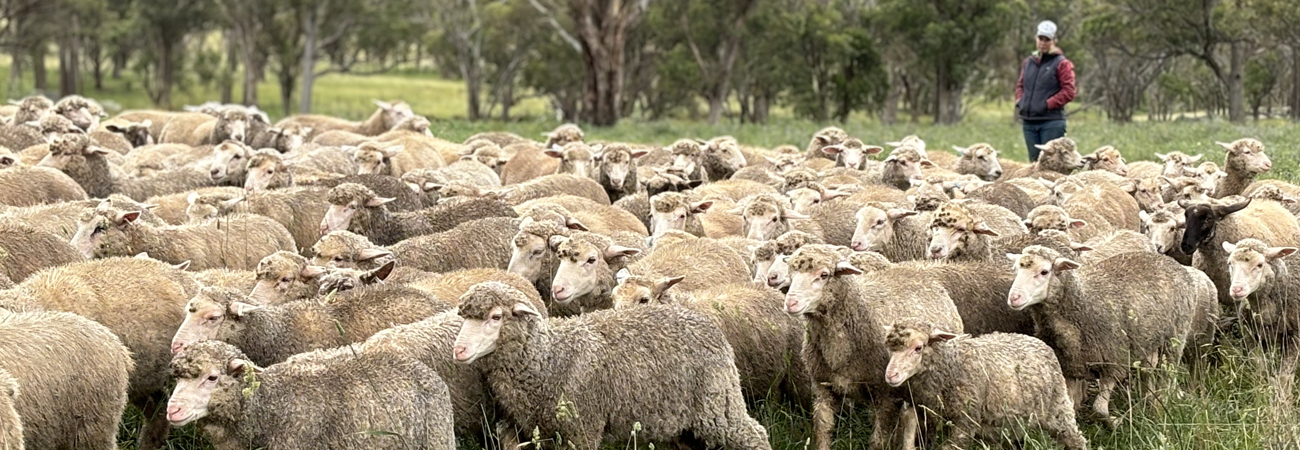
MLA’s productivity (on-farm) program operates across the beef, sheepmeat and goatmeat production sectors. On-farm productivity and profitability gains can be achieved through new research, development and adoption that results in production efficiencies, reduced costs and higher returns on investments. On-farm productivity must also contribute to a sustainable red meat industry that meets with consumers expectations on land, water and environmental management.
Outcomes
Beef productivity
Profitable, sustainable livestock businesses in a variable climate
An MLA-funded project has found that without changes to management, the productivity, profitability and sustainability of beef production within the Australian grazing system will decrease by 2050.
The ‘NEXUS’ project was prefaced on the expectation that livestock businesses will need to adapt to changes that have already occurred and prepare for the anticipated climate changes over the next decade. These changes include further increases in temperature and a greater frequency of extreme climate events such as heat waves, drought, extreme rainfall and floods. At the same time, producers are also under increasing pressure from consumers and regulators to decrease their impacts on the environment.
NEXUS is a multi-party program exploring the nexus between profitability, productivity, greenhouse gas mitigation and carbon sequestration in an increasingly variable climate. An integrated assessment of seven farm case studies across eastern Australia was used to identify system adaptations that are both profitable and sustainable.
Of the activities modelled and investigated on one of the case study farms – a property in Queensland’s Northern Downs region – improving the feedbase through over sowing of herbaceous legumes, and transitioning from a breeder herd to a steer turnover operation, resulted in the greatest improvements in productivity and profitability. Large decreases in methane emissions (per hectare and per kilogram liveweight sold basis) were possible through changing to a steer turnover operation and through the application of novel technologies (like a rumen bolus) that might provide large reductions in the production of enteric methane.
Research in this space is ongoing and remains a key priority for MLA as part of the industry’s carbon neutral by 2030 (CN30) target.
Digital agriculture
Australian Feedbase Monitor
Since the launch of the Australian Feedbase Monitor (AFM) in November 2022, the number of farm accounts using the tool has reached 2,420, with a total of 3,576 farms listed on the AFM database and the total area under management about to eclipse 92 million hectares.
Based on satellite data and widespread datasets coupled with in-field assessments, the AFM objectively measures pasture growth, biomass and ground cover using 30-day rolling averages.
The tool is designed to allow producers to effectively manage their feedbase, with objective data enabling them to make more informed decisions about the state of their pasture and pasture management strategies. It assesses long-term pasture biomass averages, which helps producers make earlier decisions when it comes to the actuals of pasture quantity and quality and allows producers to assess where pastures are responding well during different seasonal conditions, and where they are not, so you can make proactive decisions on destocking and stock movements for the health of their livestock and land.
The AFM also provides comparative data dating back to 2017, helping producers to recognise trends and changes in the distribution of pasture. The AFM is particularly powerful for producers who cannot get across all their land easily – such as extensive pastoral enterprises – as well as producers who are not familiar with the feedbase history of recent property purchases.
The tool is free for MLA members who have linked their Livestock Production Assurance (LPA) accounts to their myMLA dashboard or can be accessed by non-members via Cibo Labs’ paid subscription service.
Feedbase production
Satellite-assisted forage budgeting for northern beef businesses
In collaboration with Cibo Labs and the Australian Agricultural Company (AACo), a recent MLA-funded project sought to:
- refine current pasture biomass and pasture quality predictions
- develop methods for mapping and monitoring surface water
- implement and validate new methods for land condition prediction
- improve understanding of priorities and barriers to ag-tech adoption.
The project operated in tandem with the Australian Feedbase Monitor tool development and has taken an important step forward in enabling better monitoring of land condition for cattle producers in northern Australia.
A ‘living model’ approach was utilised – a well-established approach to national biomass predictions within operational systems. The Landscape Response Units methodology was implemented across the landscape of 768 million hectares creating some 49 million individual mapped polygons describing long-term landscape spectral response. Using this methodology is a significant step forward that will underpin a range of developments associated with natural capital including sustainable grazing management, property development, carbon accounting and biodiversity assessments.
The research team developed a prototype model which successfully mapped land condition using spatio-temporal information on selected components of the northern rangelands. They also demonstrated the ability to use new sources of remote sensing data and methods to reliably map the presence and duration of surface water relevant to extensive grazing systems and ecosystem management and improved the monitoring of pasture biomass.
Being able to consistently map land condition at paddock scales for every extensive grazing property in Australia could be a game changer for the industry. Having the capability to automatically estimate land condition with the support of local knowledge will allow producers to make more informed management and investment decisions on long-term carrying capacity, seasonal stock rates and grazing management, and infrastructure. This work is still in the early stages of development and analyses to date have focused on developing a prototype indicator for current land condition status. Additional work is required to improve accuracy across additional land types and regions, and for monitoring of land condition trajectory over time.
Livestock genetics
Genetic selection tools to reduce emissions and improve efficiency
Research is underway to develop Estimated Breeding Values (EBVs) and Australian Sheep Breeding Values (ASBVs) for methane and feed efficiency traits for cattle and sheep.
Genetic selection for reduced methane production provides producers with the ability to achieve a permanent and cumulative reduction in methane emissions within their herd and/or flock. While genetic progress takes time, it can be utilised alongside other technologies to have a lasting impact on reducing emissions. To achieve this outcome, MLA is investing in:
- Breeding for low-methane beef – a project with the University of New England (UNE), New South Wales Department of Primary Industries (NSW DPI) and Angus Australia. Researchers are capturing methane and feed intake data on the cattle from the Southern Multibreed Project and Angus Australia Sire Benchmarking project.
- Selecting for more methane-efficient sheep – a project with UNE and NSW DPI to capture methane and feed intake data on research and ram breeder flocks.
- Adding sustainability traits to the MLA Resource Flock – a project with Department of Primary Industries and Regional Development (DPIRD) that is working in partnership with the above project to capture additional animals for feed intake and methane to fast-track the development of breeding values for sheep.
- Reducing methane emissions and improving profitability in northern Australian beef – a project with the University of Queensland (UQ) measuring methane emissions on both research and commercial cattle in northern Australia.
The first research breeding values for sheep are expected to be delivered by October 2025.