

Home / Report to stakeholders / International markets
International markets
Outcomes
Trade agreements
Australia enjoys access to over 100 export markets and has 18 free trade agreements (FTAs) in place. New market opportunities continue to be pursued, with additional FTAs under negotiation or progressing via feasibility studies.
MLA has led industry’s interface with FTA negotiations through the preparation and implementation of industry endorsed advocacy strategies, associated negotiating options, and submissions and correspondence, interacting closely with the Department of Foreign Affairs and Trade (DFAT) and Department of Agriculture, Fisheries and Forestry (DAFF) trade officials.
As a consequence of this reform focus, around 86% of Australia’s red meat exports are now advantaged by access under preferential trade agreements.
Recent examples of the benefits of reform include the Australia-UK FTA and the Australia-India Economic Cooperation and Trade Agreement. Both these agreements have vastly improved access arrangements (via the ultimate elimination of tariffs and quotas in the UK and the elimination of the 30% tariff applicable to sheepmeat in India). Industry, via MLA, is subsequently increasing its investment in market development and engagement programs in both markets.
Australia and the European Union have continued FTA negotiations, however, an agreement has yet to be secured. A mutually beneficial agreement that significantly improves Australian red meat access to the 27 EU member markets is essential.
Negotiations are also underway with the United Arab Emirates – a key market for Australian red meat products in the Middle East.
In addition, the market access program has an ongoing focus on removing non-tariff barriers to trade, with an estimated $470 million having been eliminated since 2020.
New animal welfare standards in Vietnam
Vietnam’s new animal welfare standards – consistent with those applied to imported Australian-bred cattle – were confirmed at the Australia-Vietnam Beef Cattle Symposium in Hanoi in late 2023. The standards were developed over three years by the Vietnam Ministry of Agriculture and Rural Development with funding support from the Livestock Export Program (LEP) and the Australian Government.
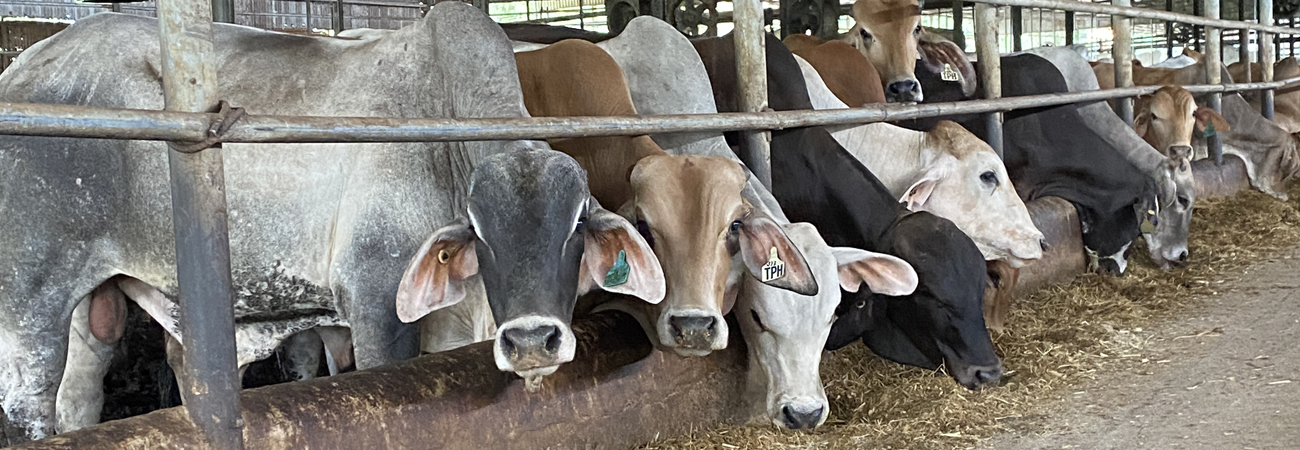
The standards have been welcomed by Australian industry as Vietnam has become a significant partner for the live export industry in the past decade, importing almost two million head of cattle in that time, and now stands as Australia’s second largest live export market for beef cattle.
The Australian industry provided significant investment into training and building relationships, working with supply chain partners to improve practices over a series of years. This commitment has contributed to shared knowledge and increased awareness of animal welfare, setting animal welfare expectations in line with those for cattle imported from Australia. The process included extensive consultation with national and provincial government officials, as well as industry, to ensure easy and practical adoption.
Australian assistance was also provided through the LEP, a collaboration between LiveCorp and MLA which provides professional development and training for workers in feedlots and abattoirs in market, along with activities to support market access and regulatory compliance.
Australia is the only exporter of live animals that requires industry to meet and surpass the ‘animal welfare guidelines for exported livestock in destination countries’ set by the World Organisation for Animal Health.
Ongoing FMD and LSD biosecurity measures
Australia continues to remain free of foot-and-mouth disease (FMD) and lumpy skin disease (LSD). The arrival of FMD and LSD to Indonesia in 2022 served as a salient reminder that biosecurity is crucial to ongoing market access and the overarching sustainability of the Australian red meat industry.
An outbreak of either disease in Australia would be devastating to our livestock industries, culminating in loss of export market access for meat and livestock due to country free health protocol requirements, as well as reduced domestic production due to state restrictions on livestock movement to control disease spread.
The Department of Agriculture, Fisheries and Forestry (DAFF) was advised by the Indonesian Agriculture and Quarantine Agency on 30 July 2023 that LSD had been detected in a small number of Australian cattle exported to Indonesia – after those cattle had arrived and spent some time in Indonesia. Australia remains free from LSD, as confirmed by Australia’s Chief Veterinary Officer on 30 July 2023.
Over the past year, the Australian red meat and livestock industry continued its assistance in escalating FMD and LSD biosecurity measures.
The LEP, through the Indonesia Animal Welfare & Wellbeing Project, facilitated the training of 394 Indonesian feedlot animal health and veterinary professionals in disease management, carcase handling and necropsy. Trainees had access to remote veterinary consultation over 12 months and are eligible to obtain competency certification in disease management and biosecurity.
The Indonesian Biosecurity Support Project, a $2 million, 18-month partnership between the Australian Government and MLA, continues to support Indonesia’s biosecurity capability to combat FMD and LSD outbreaks, while assisting ongoing market access for the live export trade from Australia.
Risk assessments and biosecurity management plans have been delivered to 33 feedlots in Indonesia, involving 57 site visits to facilities, with representatives from 30 facilities attending workshops on implementing cost-effective biosecurity measures.
The capacity of Indonesian feedlots to respond to exotic disease outbreaks has improved markedly through increased knowledge, awareness and understanding of best practice biosecurity risk assessments and management plans. The potential for a Phase 2 biosecurity project to add value to existing work undertaken and to capitalise on skilled resources in Indonesia will be explored.
The AUSVETPLAN response strategies for both FMD and LSD were both revised and updated in October 2023. The Australian Veterinary Emergency Plan is Australia’s nationally agreed approach to responding to Emergency Animal Diseases of national significance.
The AUSVETPLAN operational manual for the destruction of animals is in the process of development.
Collaboration with Uruguay
MLA and the National Meat Institute of Uruguay (INAC) have signed a memorandum of understanding – a shared commitment to collaboration and knowledge transfer on a range of pre-competitive challenges facing their beef and sheepmeat sectors. Signed by MLA Chair, Alan Beckett, and INAC Strategy Manager, Pablo Caputi, the MOU provides a formal platform for Australia and Uruguay to work together to tackle a range of shared challenges including red meat sustainability, animal health and welfare, biosecurity, trade and market access.
COP28 and other international delegations
MLA and other industry stakeholders supported the Australian Government and likeminded nations in demonstrating agriculture’s importance in climate change leadership at several international events and dialogues in 2023–24.
In partnering with the Australian Government at COP28, MLA highlighted industry’s leadership and significant investment in research, development and adoption to support climate change and food security. The event was highly successful in building stronger relations with the Australian Government, as well as providing crucial networking opportunities with global climate leaders. There have now been increased requests for Australian industry stakeholders to present to other country dialogues.
In addition, the Australian red meat industry was well represented at the FAO Global Conference on Sustainable Livestock Conference in Rome in September, the Global Agenda for Sustainable Livestock (GASL) 13th Multi-Stakeholder Partnership Meeting in Thailand in October and the Global Forum for Farm Policy and Innovation international workshop in Paris in October. These increasing engagements indicate a growing recognition of the Australian industry’s contribution to mitigating negative climate impacts and the importance of cross country and sector collaborations to finding climate solutions.