

Home / Report to stakeholders / Integrity systems
Integrity systems
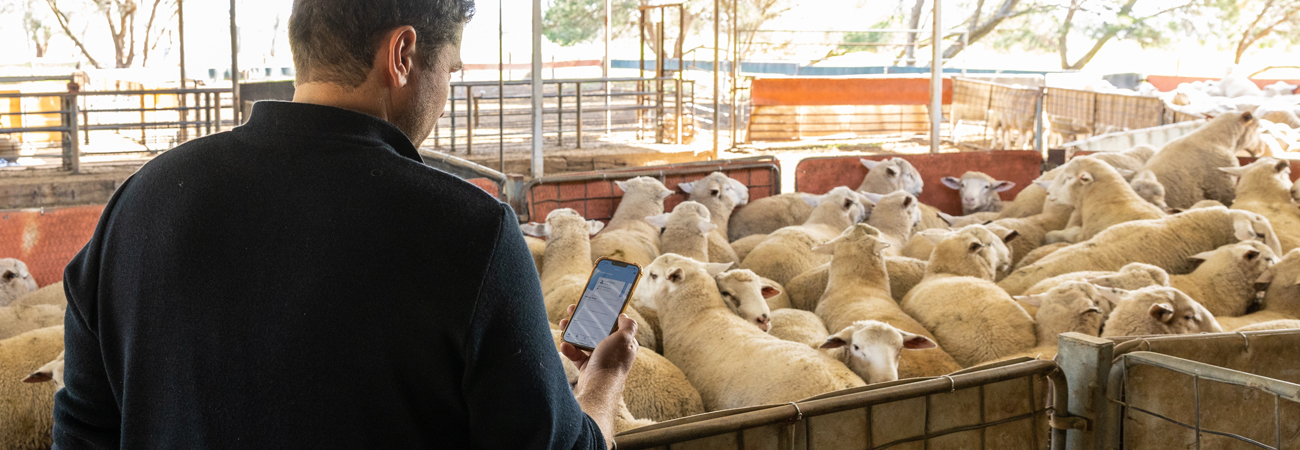
Integrity Systems Company (ISC), a wholly owned subsidiary of Meat & Livestock Australia, delivers programs which protect industry’s disease-free status and underpin the marketing of Australian product as clean, safe, and traceable. These programs help Australia capture price premiums for customers and consumers willing to pay more for higher levels of product traceability and assurance.
Australia enjoys continued market access to over 100 export markets and an exotic disease-free status, thanks to robust integrity systems that underpin the traceability, safety and quality of our products and a track record by Australian industry in pursuing preferential trade agreements, in partnership with the federal government.
ISC oversees traceability and assurance systems:
- National Livestock Identification System (NLIS), which provides identification and lifetime traceability of cattle, sheep and goats, to guarantee industry’s biosecurity and food safety.
- Livestock Production Assurance (LPA), the on-farm assurance program covering food safety, animal welfare, traceability and biosecurity which provides evidence of livestock history and on-farm practices when transferring animals through the value chain.
- National Vendor Declarations (NVDs) – the legal documents which declare necessary information about the health status and history of livestock being sold.
Outcomes
NLIS Database Uplift Project
In July 2023, ISC commenced a three-year project to develop a new and improved traceability platform to replace the 23-year-old National Livestock Identification System (NLIS) database. This significant project is being supported by a $22.5 million Australian Government grant.
With escalating customer and consumer expectations and heightened awareness surrounding biosecurity, market access, food safety, sustainability and animal welfare, the need for a robust and agile livestock traceability system has never been greater.
The NLIS Database Uplift Project will:
- provide a fit-for-purpose and user-friendly traceability platform
- deliver flexibility and scalability to track all livestock movements
- ensure our integrity systems are better placed to meet the future needs of their many users.
The grant will support the scoping, design, build and deployment of the new platform to replace the existing NLIS database, as well as the change management program to phase out and transition to the new platform.
The project has defined six core phases. The first part of the project involved the ‘Detailed Discovery and Define’ phase, which defined the scope of the build, allowing for a more accurate budget to be determined for the subsequent phases of the project. The project has now moved to the ‘Architecture and Design’ phase. This phase involves designing the underlying infrastructure and software which will support the new NLIS database.
The Australian Government has established a governance group to provide overarching governance of the project. The group comprises industry and government members and its role is to oversee and provide key approvals and guidance throughout the project, monitor overall progress, and identify key risks and challenges.
The new platform will provide improved interoperability in being able to accommodate additional data inputs from other systems and will be scalable to support the expected growth under a national implementation of individual electronic identification (eID) for sheep and goats.
It will assist in demonstrating Australia’s agricultural credentials and compliance with international market access requirements such as sustainability and animal welfare, crucial to supporting current and future sustainability, traceability and market access requirements.
The project is due for completion by 30 June 2026.
Livestock Production Assurance (LPA) electronic National Vendor Declaration (eNVD) enhancements
Supporting Australia’s LPA-accredited producers to increase their use of digital livestock consignments and transition away from purchasing printed National Vendor Declaration (NVD) books is a key focus for ISC. In March 2024, 13 new features were released to ensure the eNVD web-based system and mobile app were more accessible to the broader supply chain including transporters, agents, saleyards and processors.
The LPA program is crucial for ensuring Australian red meat continues to meet the expectations of global and domestic markets. LPA covers seven key requirements across food safety, biosecurity and animal welfare that producers need to satisfy to become accredited. NVDs are legal documents which LPA-accredited producers use to communicate their food safety and their livestock treatment status as they move through the supply chain. eNVDs not only increase the robustness and completeness of the data which underpins the integrity system, but also remove the need for manual data entry through the supply chain leading to greater efficiency and transparency.
ISC continues to host demonstration webinars to help producers and supply chain stakeholders to confidently create and submit digital consignments, providing step-by-step how-to guides and support through the Customer Service Centre.
To date, the eNVD Livestock Consignments app has been downloaded 34,171 times since it was officially launched in March 2022. Currently 30% of all livestock consignments are created using either the eNVD web-based system or mobile application.
Updating the LPA Rules and Standards to include sustainability measures
Following industry approval, ISC is in the process of updating the LPA Rules and Standards.
A key update to the rules will upgrade the accreditation and reaccreditation process to a self-assessment which aims to improve education, awareness and conformity to the program. The updates will also require all producers to complete an Animal Welfare Management Plan detailing how they meet the Australian Government’s Animal Welfare Standards and Guidelines. ISC is working with industry to develop an Animal Welfare Management Plan template based on the Animal Welfare Standards and Guidelines before the new requirement is implemented.
Once the template is finalised, it will be added into the LPA Self-Assessment tool so that producers can complete it as part of a new LPA accreditation or when renewing accreditation. Once the management plan has initially been completed, it can then be reviewed and updated at any time or at the next accreditation renewal. ISC is also working with industry on the audit and verification requirements for the Animal Welfare Management Plan which are expected to launch by the end of 2024.
The new LPA rules also allow the LPA program to offer voluntary modules of accreditation. These voluntary modules can be opted into by producers to provide additional assurance around production or raising claims and will permit additional declarations to be made on eNVDs. The first voluntary module will be for the goat industry (Harvested Rangeland Goat module) and a working group has been established to develop a sustainability module for LPA which will utilise the work completed by MLA in this area.
The updates will also allow LPA to recognise other industry or compliance programs producers may be party to. This aims to reduce the compliance burden of audits and the number of declarations producers need to complete when moving livestock through integrations with eNVD. This opportunity requires producer approval for data sharing but aims to share audit outcomes where programs are equivalent. It would also permit other programs to link with LPA and enable a producer to make relevant declarations about other third-party certifications when completing their eNVD.
ISC is also working with industry to develop a solution to meet the European Union Deforestation Regulation that comes into force at the end of 2024. Key challenges pertain to data privacy, noting the goal is to deliver a minimum viable product to continue beef and leather exports to the EU while a longer-term solution can be developed as further clarity is obtained from the EU.